Skip to content
Operations & Systems

Design Intake-to-CAD

A design-service network spread across several cities had strong design capability and no shared standard for how work arrived or got checked. Requirements came in whatever shape the sender chose, and whether a plan passed depended on which reviewer opened it. Over roughly two quarters we built the intake, generation, and validation layer that gave every location one way of working.

Snapshot

2 quartersmulti-phase rollout

Client profile
Distributed design-service network, 200–500 people, South Asia
Engagement
Catalyst — scoped, multi-phase rollout
Timeline
Roughly two quarters
Scope
Intake standardization, CAD automation, rules validation, review governance
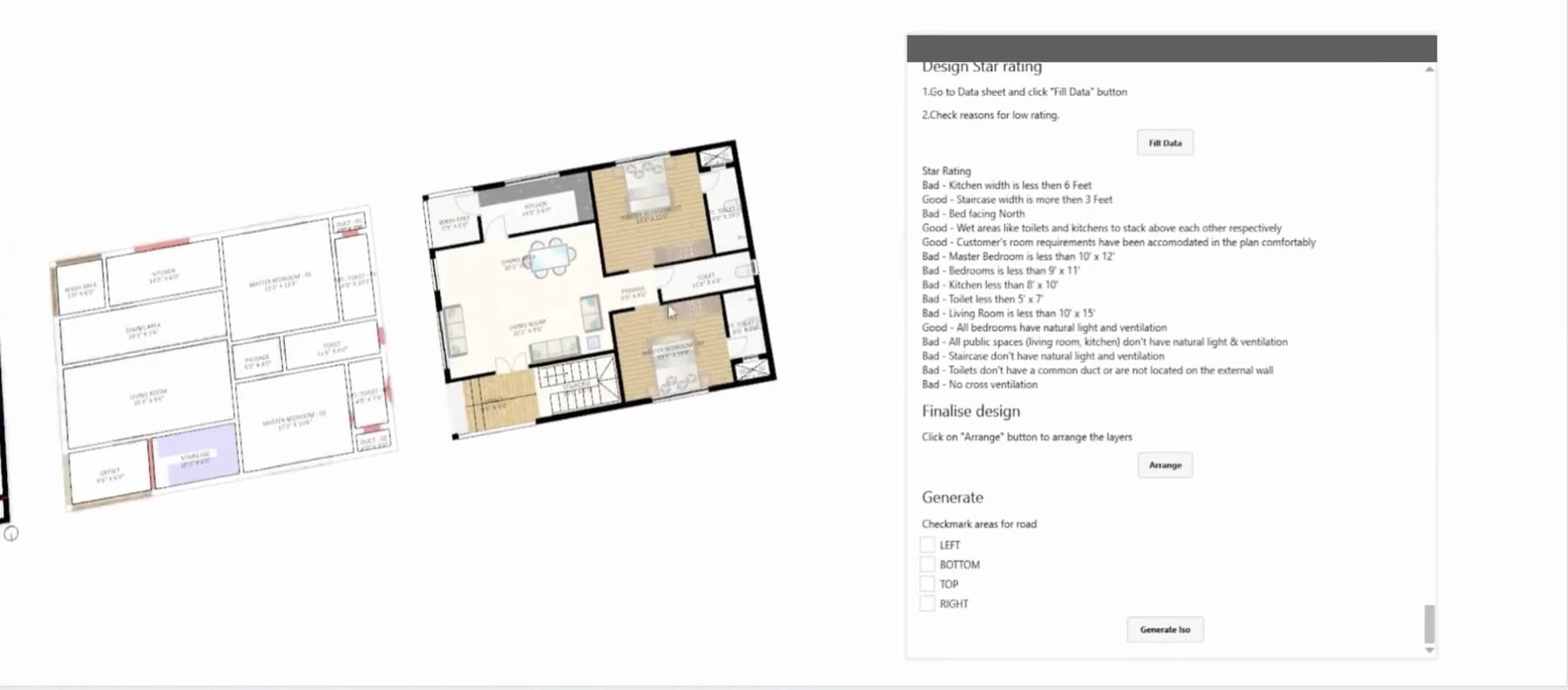
An auto-generated floor plan beside the rule-validation panel that scores it
01

The problem

A regional design operation needed consistent output across multiple cities while keeping costs predictable. Demand grew faster than manual drafting capacity, and turnaround pressure started showing up in review quality.

  • Requirements entered the process in uneven formats, forcing redesign work early in execution
  • Design checks depended on individual reviewers instead of repeatable system rules
  • Handoffs between intake, drafting, and QA caused avoidable queue buildup
02

What we built

First we mapped how intake and review actually worked, city by city. Then one shared data model for requests, constraints, and acceptance criteria — the thing every location had been interpreting its own way.

From that model: structured intake forms, automated CAD starter generation, and a validation engine that encodes their own review standards — room dimension minimums, light and ventilation per room, wet areas stacked between floors. Checks that used to live in individual reviewers' heads now score a plan before anyone opens it.

Then runbooks, ownership checkpoints, and weekly reliability reviews — so the workflow held as volume grew, instead of buckling under it.
03

What stuck

  • Teams aligned around one intake standard instead of ad-hoc interpretation
  • Review cycles shifted from subjective rework to exception handling
  • The operating model became reusable for new regions and new team members
04

Impact

  • Design turnaround stopped being gated by manual drafting capacity
  • Rework loops between intake and drafting largely disappeared
  • First-pass technical compliance became consistent rather than reviewer-dependent